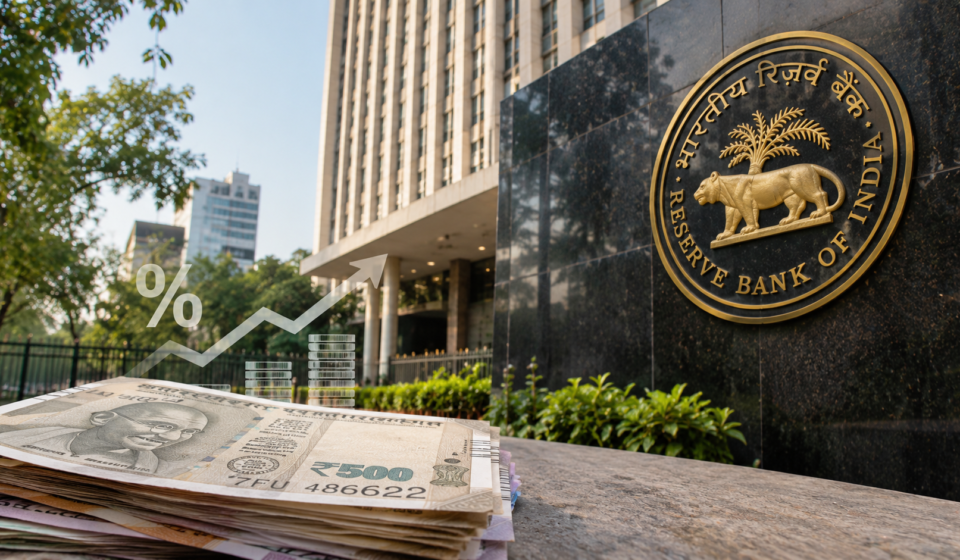
RBI MPC October 2026: What the Repo Rate Decision Could Mean for Your EMI, Loan and Savings

If you have a home loan, personal loan, business loan or even money sitting in a fixed deposit, there’s an RBI meeting you might want to keep an eye on this week.
The Reserve Bank of India’s Monetary Policy Committee (MPC) is meeting from October 5 to October 7, 2026, and the policy decision is expected on October 7.
The repo rate is currently 5.25%. The RBI has kept it unchanged through its last four policy reviews after cutting rates by a cumulative 125 basis points in 2025.
Now, economists are debating whether the RBI could raise the rate by 25 basis points to 5.50%.
But before we start saying “EMIs are definitely going up” — hold on.
The October decision has not happened yet.
So let’s understand what the RBI is actually deciding, why people are watching this meeting and what it could mean for your money.
First, what is the RBI repo rate?
Let’s make this really simple.
The repo rate is the interest rate at which the RBI lends money to commercial banks against eligible securities.
When the repo rate changes, it can influence the cost at which banks raise funds and, eventually, the interest rates offered to borrowers and savers.
So you don’t necessarily see a line on your bank statement saying:
“RBI changed repo rate.”
But you can feel the effects through things like loan interest rates, EMIs and deposit rates.
That’s why this one number gets so much attention.
RBI MPC October 2026: Important dates
| Event | Date |
|---|---|
| MPC meeting begins | October 5, 2026 |
| MPC meeting ends | October 7, 2026 |
| Policy decision | October 7, 2026 |
| Current repo rate | 5.25% |
The six-member MPC is scheduled to meet from October 5–7, with the policy announcement due on October 7.
Why is everyone talking about a possible rate hike?
There are a few things happening at the same time.
One of the biggest is inflation.
India’s retail inflation rose to 4.82% in August, according to current reporting, moving above the RBI’s 4% medium-term target for the third consecutive month.
Energy prices and crude oil have also become a concern.
At the same time, the Indian economy has continued to show relatively strong growth.
So the RBI has a balancing act here:
Keep inflation under control without unnecessarily making borrowing more expensive.
That’s why this meeting is getting so much attention.
Will RBI increase the repo rate in October 2026?
This is where we need to separate expectation from fact.
The RBI has not announced an October rate hike yet.
However, several economists expect a possible 25-basis-point increase, which would take the repo rate from 5.25% to 5.50%.
A Business Standard poll found that 8 out of 10 economists surveyed expected a 25-basis-point hike, while a Reuters poll also found that around 60% of economists expected a similar increase.
But these are forecasts.
The actual decision belongs to the RBI’s Monetary Policy Committee.
So for now:
5.25% = current repo rate
5.50% = possible outcome being discussed
October 7 = decision date
That’s the cleanest way to look at it.
What happens if RBI raises the repo rate?
This is the part most people actually care about.
Let’s say the RBI increases the repo rate.
That can put upward pressure on borrowing costs.
Depending on how individual banks price their loans and which benchmark your loan is linked to, borrowers could eventually see changes in their interest rates or repayment structure.
That could affect:
- Home loans
- Personal loans
- Business loans
- Some floating-rate loans
- Other forms of borrowing
But don’t assume that every loan EMI will immediately increase on October 7.
The actual impact depends on your bank, your loan agreement, the benchmark used and how quickly the change is passed through.
What about home loan EMIs?
This is probably the biggest question for borrowers.
If you’re already paying a floating-rate home loan, a rise in the benchmark rate can eventually increase your borrowing cost.
For example, imagine you have a loan where the interest rate is linked to an external benchmark.
If that benchmark rises, your bank may revise your loan rate according to the terms of your loan.
That can mean:
higher EMI
or
the same EMI but a longer repayment period
depending on how the bank handles the adjustment.
So if you’re currently paying a home loan, don’t just look at the repo rate.
Check what benchmark your loan is linked to.
That’s much more useful.

What if the RBI keeps the repo rate unchanged?
Then there wouldn’t be a new repo-rate increase from this meeting.
But that doesn’t automatically mean every loan rate stays exactly where it is forever.
Banks can have other funding costs and pricing factors.
Also, the RBI’s statement about inflation, growth and its future policy approach can affect expectations in financial markets.
So the headline number matters, but the language around the decision matters too.
What does the RBI rate decision mean for fixed deposits?
Here’s the other side of the story.
Higher interest rates aren’t automatically bad news for everyone.
If you’re a saver, higher rates can potentially be helpful because banks may offer better returns on deposits, depending on their pricing decisions.
But again, there isn’t a simple rule saying:
RBI hikes 0.25% = your FD rate automatically increases 0.25%.
Banks decide their deposit rates based on their own funding requirements and market conditions.
So if you’re planning to lock money into an FD around the policy announcement, compare the actual rates offered by banks rather than assuming what the RBI decision will do.
Why is inflation so important for this RBI meeting?
Think of inflation as the general increase in prices over time.
When inflation stays high, your money doesn’t buy as much as it used to.
And the RBI has an inflation-targeting framework.
That’s one reason the central bank watches price pressures so closely when deciding interest rates.
Current reporting says retail inflation reached 4.82% in August, while wholesale inflation was also elevated. Higher crude oil prices are adding another layer of concern.
So the RBI has to look at the bigger picture rather than just one month’s inflation number.
And what does the rupee have to do with it?
Quite a lot, actually.
The Indian rupee has weakened against the US dollar during 2026, while global interest rates and bond yields have also been moving.
Reuters reported that the rupee had depreciated by around 6% against the dollar this year as of late September.
A weaker rupee can make some imported goods and inputs more expensive.
And when global energy prices are also high, that can add another layer of inflation pressure.
So the RBI isn’t looking at the repo rate in isolation.
It’s looking at inflation + growth + currency + global rates + liquidity + financial conditions.
What should borrowers do right now?
Honestly, don’t panic.
If you have a loan, October 7 is a good reason to understand your loan, not necessarily to start making random financial decisions.
Check:
1. What interest rate are you paying?
Look at your latest loan statement.
2. Is your loan fixed or floating?
This makes a big difference.
3. What is your loan benchmark?
Find out what your interest rate is linked to.
4. When was your last rate reset?
Your bank’s reset schedule matters.
5. How much would your EMI change?
If your loan is floating, ask your bank for the impact of a 25-basis-point change.
That’s much better than trying to guess.
What should people with FDs do?
If you have money sitting in an FD, don’t automatically break it just because you hear “RBI rate hike.”
Look at:
- Current FD rate
- Remaining tenure
- Premature withdrawal penalty
- Tax impact
- Alternative rates available
- When your FD matures
If your FD is already locked at a good rate, breaking it early could actually work against you.
So compare the actual numbers, not just the news headline.
What about people planning to take a loan?
If you’re planning a large loan soon, the RBI decision is worth watching.
But don’t make a major financial decision purely because someone online says:
“RBI is going to hike rates, so take your loan TODAY.”
Nobody knows the exact future path of interest rates.
Instead, compare:
Loan amount + interest rate + processing fee + tenure + prepayment conditions + total interest payable.
The interest rate is important, but it isn’t the only number.
Why this RBI meeting matters for ordinary people
You don’t need to understand every technical term used in an RBI policy announcement.
The simple version is:
RBI decides policy rates → banks respond to funding conditions → loan and deposit rates can change → your borrowing and saving costs can be affected.
That’s why a meeting that sounds like something only economists should care about can actually matter to your monthly budget.
And with the festive season beginning, borrowing costs are particularly relevant for people considering big-ticket purchases, home loans, vehicle loans or business borrowing.
RBI MPC October 2026: What to watch on October 7
When the RBI announces its decision, don’t just look for the repo-rate number.
Look at these things too:
Repo rate
Did it increase, decrease or stay unchanged?
Policy stance
What is the RBI saying about future policy?
Inflation outlook
Does the RBI expect price pressures to increase or ease?
Growth outlook
Is economic growth still holding up?
Liquidity
Is there enough money moving through the banking system?
Governor’s comments
Sometimes the explanation is just as important as the headline decision.
One thing to remember
If you see headlines saying:
“RBI will definitely hike rates on October 7.”
Take that with a little caution.
As of October 3, the decision hasn’t happened yet.
Economists and analysts are making forecasts, and several expect a 25-basis-point hike, but an expectation isn’t an announcement.
We’ll know the actual decision on October 7, 2026.
And that’s exactly why this article should be updated after the announcement rather than publishing a completely new article.
FAQs
When is the RBI MPC meeting in October 2026?
The RBI Monetary Policy Committee meeting is scheduled for October 5 to October 7, 2026.
When will RBI announce the October 2026 repo rate decision?
The policy decision is scheduled for October 7, 2026.
What is the current RBI repo rate?
The current repo rate is 5.25% as of October 3, 2026.
Is RBI definitely increasing the repo rate?
No. As of October 3, the October decision has not been announced. Several economist surveys expect a possible 25-basis-point increase, but that remains a forecast.
Will a repo-rate hike increase my EMI?
It can affect borrowing costs, but the exact impact depends on your loan type, benchmark, bank and reset terms. A repo-rate change does not mean every EMI automatically changes by the same amount.
Will FD interest rates increase if RBI hikes the repo rate?
Not automatically. Banks decide their deposit rates based on their funding needs and market conditions.
Why does RBI change interest rates?
Interest rates are one of the tools used by the RBI to manage inflation and broader monetary and financial conditions while considering economic growth.
What should I do before the October 7 RBI decision?
If you have a loan, check your current interest rate, benchmark and reset terms. If you have savings or FDs, compare the actual rates you’re being offered rather than making a decision based only on expectations about the RBI meeting.
What happens after October 7?
This is where India Nudge can actually get two articles out of one news event.
Once the RBI announces the decision, update this article with:
UPDATE — October 7, 2026: RBI has decided to ______. Here’s what the decision means for borrowers, FD investors and ordinary households.
Then add a second article:
“RBI Repo Rate Decision October 2026: What Changes for Your EMI, FD and Loans?”
And link the two together.
That way you’re not wasting the SEO work you’ve already done on this page.
This article is for general information and should not be treated as personal financial advice. Interest rates and bank loan/FD rates can change, so readers should check the latest terms directly with their bank or financial institution.



[…] Better anchor: RBI MPC October 2026 […]
[…] If you want to understand how the repo-rate decision could affect your EMI, loans and savings in more detail, read our earlier guide on the RBI MPC October 2026 decision- earlier guide on the RBI MPC October 2026 decision […]