
Fitbit Air Price in India: ₹13,999 for a Fitness Tracker With No Screen — Is It Worth It?

Okay, this one is a little different.
Google has launched the Fitbit Air in India, and the first thing you notice about it is actually the thing that’s missing.
There is no screen.
No notifications popping up on your wrist.
No tiny screen asking you to swipe.
No checking messages every five minutes.
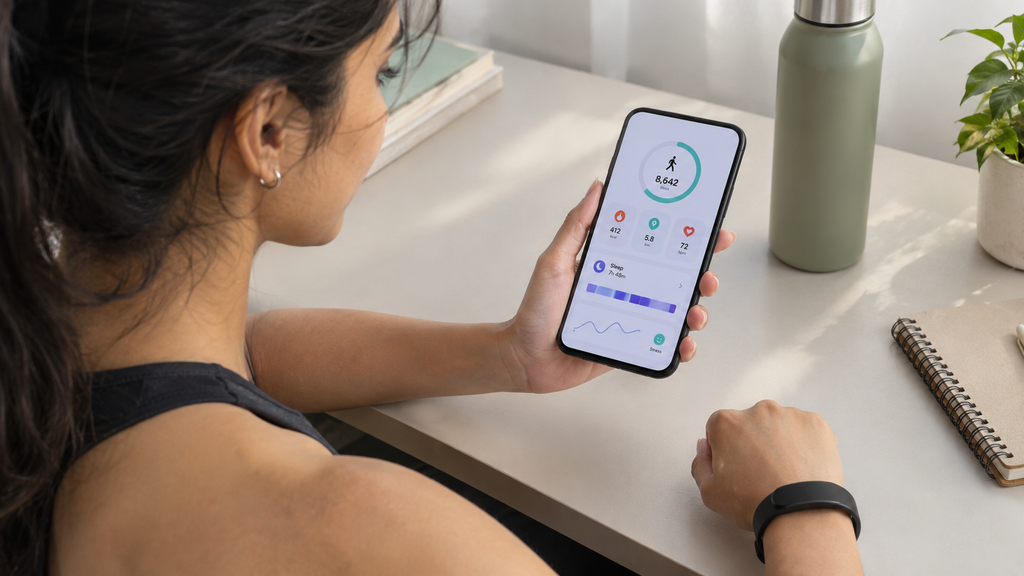
Instead, the Fitbit Air quietly tracks your health and activity in the background, while you check all the data later through the Google Health app.
The price in India is ₹13,999, and it officially went on sale from October 2, 2026. Google is also including a three-month trial of Google Health Premium with the device.
So the obvious question is:
Why would someone spend almost ₹14,000 on a fitness tracker that doesn’t even have a display?
Let’s break it down.
Fitbit Air Price in India
The Fitbit Air is priced at ₹13,999 in India.
It is available through the Google Store and Google’s retail partners, with four colour options:
- Obsidian
- Berry
- Lavender
- Fog
The box also includes a three-month trial of Google Health Premium, which gives access to the full Google Health Coach experience.
After the trial, some of the more advanced Health Coach features require a paid subscription.
So the ₹13,999 price isn’t necessarily the entire long-term cost if you want every premium feature.
That’s something I’d personally check before buying.
Fitbit Air: Quick Specs
| Feature | Fitbit Air |
|---|---|
| Price in India | ₹13,999 |
| Display | No screen |
| Battery | Up to 7 days |
| Heart-rate tracking | Yes |
| SpO₂ tracking | Yes |
| Sleep tracking | Yes |
| Automatic activity tracking | Yes |
| Heart-rhythm monitoring | Yes, including AFib alerts in supported markets |
| Weight | About 12g |
| Phone support | Android and iOS |
| Health app | Google Health |
| Health Coach | Yes |
| Free Premium trial | 3 months |
Google says the Fitbit Air is its smallest tracker yet and is designed to be worn throughout the day and night.
Why does Fitbit Air have no screen?
This is probably the most interesting thing about the whole product.
Most fitness bands are basically tiny smartwatches.
You can see the time, notifications, messages, steps, heart rate and sometimes even reply to things.
Fitbit Air takes the opposite approach.
It doesn’t show you anything.
The tracker collects the data, and your phone becomes the place where you actually see it.
And honestly, I can understand the idea.
Sometimes you buy a smartwatch to track your health and then end up checking Instagram notifications, WhatsApp messages and random notifications on the same watch.
So instead of putting another screen on your wrist, Fitbit Air is basically saying:
“Wear it. Forget about it. Check the data when you actually want to.”
That is also one reason screenless fitness trackers have started getting attention from people who don’t want a smartwatch constantly asking for their attention.
What can Fitbit Air actually track?
Despite having no screen, Fitbit Air isn’t exactly basic.
Google says it can track several health and activity metrics, including:
24/7 heart-rate tracking
The tracker continuously monitors heart rate and can also monitor heart rhythm.
Google says Fitbit Air supports AFib alerts in supported markets.
But this is important:
It isn’t a medical device.
Google specifically says the health and sleep features aren’t intended to diagnose or treat medical conditions.
So don’t buy it thinking it’s going to replace proper medical monitoring.
SpO₂ tracking
Fitbit Air can also track blood oxygen saturation (SpO₂).
Again, this is a wellness-tracking feature and shouldn’t be treated as a medical diagnosis.
Sleep tracking
This is actually one of the areas where the screenless design makes sense.
Because the Fitbit Air is small and lightweight, Google is positioning it as something you can comfortably wear overnight.
It tracks things such as:
- Sleep duration
- Sleep stages
- Sleep patterns
- Resting heart rate
- Heart-rate variability
Google also says its improved heart-rate monitoring can enhance sleep tracking and that the device can detect naps of 20 minutes or longer.
So if you’re someone who actually cares about sleep data but doesn’t want to sleep wearing a chunky smartwatch, this is probably one of the more interesting parts.

How long does Fitbit Air battery last?
Google claims up to seven days of battery life on a single charge.
And if you’re in a hurry, the company says five minutes of charging can provide up to one day of use.
That’s obviously going to depend on how you use the tracker, because battery claims are generally measured under specific testing conditions.
But compared with charging a smartwatch every day or two, a week-long battery is definitely convenient.
What about workouts?
Fitbit Air isn’t just for counting steps.
It can automatically recognise and track common activities, and Fitbit says it supports more than 40 exercise modes.
You can also start workouts through the Google Health app and use guided workouts with the Google Health Coach.
The tracker itself stays simple.
The more detailed information appears on your phone.
The Google Health Coach is actually the interesting part
And this is where Google is trying to make Fitbit Air more than just another fitness band.
The data collected by the tracker feeds into the Google Health Coach, which uses AI to turn all those numbers into more understandable insights and recommendations.
Instead of simply telling you:
“Your sleep was 6 hours 42 minutes.”
The idea is to make that information more useful by looking at trends and your broader activity.
Google says the Health Coach can use information such as activity, sleep and lifestyle details to provide more personalised guidance.
That’s also why the subscription matters.
The hardware collects the data, but Google’s bigger pitch is really about what the software can do with that data.
Fitbit Air vs a normal smartwatch
This is where things get interesting.
If you want:
Notifications + calls + apps + music controls + a screen + fitness tracking
then a smartwatch makes much more sense.
But if you want:
Sleep tracking + activity tracking + heart-rate data + a lightweight device + fewer distractions
then the Fitbit Air’s approach starts making more sense.
It’s basically two different philosophies.
Smartwatch:
“Put your phone on your wrist.”
Fitbit Air:
“Track your health and leave your phone in your pocket.”
And honestly, that’s probably the biggest selling point of the Fitbit Air.
Fitbit Air: Pros and Cons
What I like about it
No screen
You don’t have another tiny screen demanding your attention.
Lightweight design
Google says it is designed for comfortable 24/7 wear.
Up to seven days of battery
That makes overnight tracking much easier.
Good amount of health tracking
Heart rate, SpO₂, sleep and activity tracking are all included.
Google Health Coach
The AI-powered software layer is one of the more interesting parts of the product.
Things you should think about before buying
₹13,999 isn’t exactly cheap
There are plenty of fitness bands and smartwatches available in India at lower prices.
No display
For some people this is the entire reason to buy it.
For others, it could be the biggest deal-breaker.
Some advanced features need a subscription
The three-month Premium trial is useful, but remember that some advanced Health Coach features require Google Health Premium after the trial.
Your phone is still required for the detailed experience
The tracker itself doesn’t show your health information.
So, who is Fitbit Air actually for?
I’d say there are a few types of people who might genuinely like this.
You hate smartwatch notifications
If you don’t want another screen buzzing on your wrist, this makes sense.
You care about sleep tracking
The lightweight screenless design is particularly useful if you want to wear something overnight.
You want health tracking without the smartwatch experience
This is basically the entire idea behind Fitbit Air.
You already use Google’s ecosystem
If you’re already comfortable with Google Health and Fitbit’s ecosystem, the integration could be more useful to you.
And who probably shouldn’t buy it?
If you want to see the time quickly, answer notifications, control music, use apps or interact directly with your wearable, a screenless tracker isn’t going to give you that.
Also, if you’re buying purely because you saw the word AI, don’t.
The AI features are interesting, but the actual value depends on whether you’ll use the health insights regularly.
Is Fitbit Air worth ₹13,999?
The interesting thing about Fitbit Air is that the lack of features is actually part of the product.
No screen.
No notifications.
No constant interaction.
Just tracking in the background.
At ₹13,999, it’s definitely not the cheapest fitness tracker you can buy in India. But it’s also not trying to compete purely on the number of features.
It’s selling the idea of less screen, less distraction and more passive health tracking.
Whether that is worth ₹13,999 really depends on what you want from a wearable.
If you want a mini smartphone on your wrist, this isn’t it.
If you want something you can wear, forget about and check later, that’s exactly where Fitbit Air starts making sense.
Fitbit Air FAQs
What is the price of Fitbit Air in India?
The Fitbit Air is priced at ₹13,999 in India.
Does Fitbit Air have a screen?
No. Fitbit Air is a screenless fitness tracker. Your health and activity data can be viewed through the Google Health app.
How many days does Fitbit Air battery last?
Google claims up to seven days of battery life, depending on usage and settings.
Does Fitbit Air track sleep?
Yes. It tracks sleep duration and sleep stages and provides additional sleep-related insights through the Google Health ecosystem.
Does Fitbit Air track heart rate?
Yes. It supports continuous heart-rate tracking along with other heart-related metrics.
Does Fitbit Air work with iPhone?
Yes. Google says Fitbit Air works with compatible Android and iOS devices and requires a Google Account and Google Health app.
Does Fitbit Air require a subscription?
The device works with the Google Health app, but some advanced Health Coach features require Google Health Premium. A three-month Premium trial is included with the device.
Is Fitbit Air a medical device?
No. Google says Fitbit Air’s health and sleep features are not intended for medical diagnosis or treatment.
Bottom line
Fitbit Air is a pretty simple idea:
Track more. Look at your wrist less.
At ₹13,999, it’s entering a market where buyers have plenty of cheaper fitness bands and smartwatches to choose from. So its appeal isn’t really about having the longest list of features.
It’s about the screenless experience, comfortable all-day and overnight tracking, and Google’s attempt to turn health data into something more useful through its AI-powered Health Coach.
And honestly, in a world where even our watches keep asking for our attention, maybe having nothing to look at is the feature.
Prices, features and availability can change. Check Google’s official product information before purchasing. Fitbit Air is not intended for medical diagnosis or treatment.