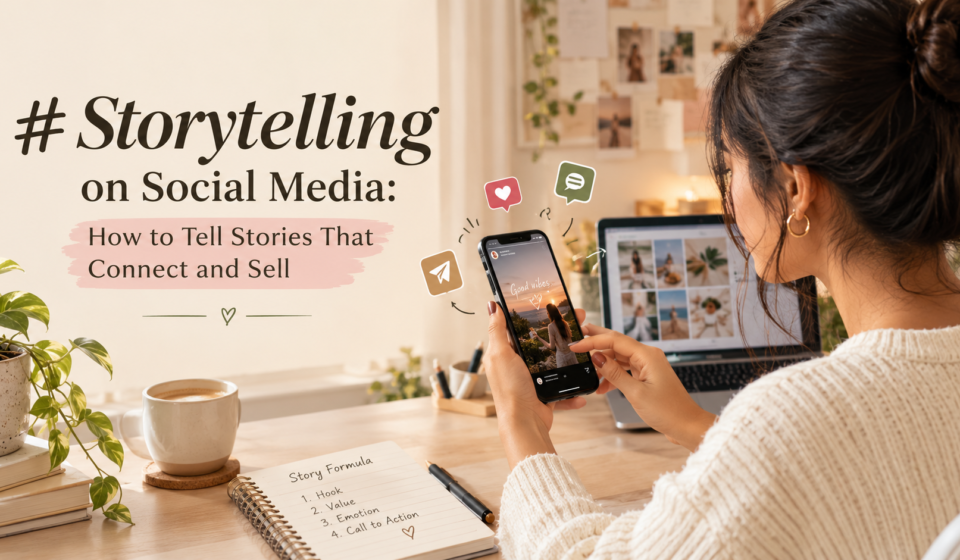

Ever noticed how you can scroll past 20 promotional posts but stop scrolling when someone starts telling a story?
Maybe it’s a creator talking about a mistake they made. A small business owner sharing how their idea started. Or someone explaining a problem you thought only you had.
You stop because something feels familiar.
That’s the power of storytelling.
On social media, people don’t just want to see what you’re selling. They want to understand the person, idea or experience behind it.
And if you’re a content creator, freelancer, business owner or someone trying to build a personal brand, learning to tell better stories can change how you create content.
What Is Storytelling on Social Media?
Storytelling on social media means sharing an experience, idea, problem or transformation in a way that helps people connect with your message.
It doesn’t mean every post needs a dramatic story or a sad background.
Your story could be about:
- A mistake you made while learning something new.
- A problem you finally figured out.
- Something you wish you knew earlier.
- Why you created a product.
- A small moment that changed your perspective.
The goal isn’t to make your life sound extraordinary.
It’s to make your message meaningful to the person watching or reading it.
What Is Story Selling?
Story selling is using a story to help people understand the value of a product, service or idea.
Think about two examples.
Example 1: Direct promotion
“I created a digital planner. Buy it now to organize your life.”
Example 2: Story selling
“I kept making new routines every Monday. By Wednesday, I’d forgotten half of them. I didn’t need another complicated system. I needed something simple enough to actually use. That’s why I created a planner that helps me focus on one day at a time.”
Both examples promote a planner.
But the second explains the problem behind the product and why it exists.
That gives the audience a reason to care.
Story selling isn’t about manipulating people into buying. It’s about helping the right people understand how your offer might solve a problem they already have.
How to Tell a Story That People Want to Hear
You don’t need to be a professional writer or a natural storyteller. Start with this simple four-part structure.
1. Start with a relatable problem
Give people a reason to pay attention.
For example:
“I have 50 content ideas saved, but somehow I still don’t know what to post.”
It’s specific, relatable and easy to understand.
2. Show what happened
Explain the situation in a few sentences.
“I kept saving ideas, planning new content and telling myself I’d start tomorrow. But the more I planned, the harder it became to actually post.”
Now the audience understands the problem.
3. Share the realization
What did you learn, discover or change?
“Then I realized I wasn’t running out of ideas. I was making the process so complicated that I wasn’t doing anything.”
This is the part that gives your story meaning.
4. Connect it to your message
End with a takeaway, a question or a relevant next step.
“Now I’m trying to focus on creating one useful post at a time instead of planning an entire month’s content in my head.”
If you sell a product or service, this is also where you can naturally explain how it helps with the problem.
You don’t have to force a sale into every story.
Sometimes the goal is simply to build trust.
Where Can You Use Storytelling?
Storytelling isn’t limited to long Instagram captions or talking-head Reels.
You can use it in:
- Instagram Reels: Tell a short story about a mistake, lesson or experience.
- Instagram Stories: Share your process, answer questions or explain why you’re working on something.
- Carousels: Turn a problem and its solution into a sequence of slides.
- YouTube videos: Explore an experience or topic in greater depth.
- Blog posts: Explain a problem, teach a solution and give readers practical examples.
- Product pages: Explain who a product is for, what problem it addresses and why you created it.
- Emails: Share a relevant experience before introducing an offer.
The format can change, but the principle remains the same: give people a reason to care about your message.
Storytelling vs. Story Selling: What’s the Difference?
Storytelling focuses on communicating an experience, idea or message through a story.
Story selling uses that story to help people understand the value of an offer and consider taking action.
For example, a creator might tell the story of struggling to stay consistent with content. That’s storytelling.
If the creator then explains how a content planner helps them organize ideas and invites interested viewers to explore it, the story also supports selling.
The story creates the connection. The offer provides a possible next step.
Neither guarantees a sale, but both can make your communication clearer and more relatable.
One Simple Exercise to Try Today
Think about a problem you’ve experienced recently.
Now answer these four questions:
- What was the problem?
- What happened because of it?
- What did you realize or learn?
- What could someone else take away from your experience?
Turn your answers into a short post or a 30-second Reel.
Don’t try to make every sentence sound impressive. Write the way you’d explain the experience to a friend.
Then ask yourself: Would someone understand why this story matters to them?
That’s a good place to start.
Final Thoughts
You don’t need a dramatic life story to become a better storyteller.
Sometimes, the most relatable content comes from ordinary experiences explained honestly and clearly.
If you’re building a personal brand, growing a business or trying to sell something online, start by understanding the person you’re speaking to. Learn what they struggle with, what they want to achieve and what questions they have.
Then tell stories that genuinely help them see something differently.
Because storytelling isn’t just about getting attention. It’s about giving people a reason to listen, remember your message and decide whether they trust what you’re offering.